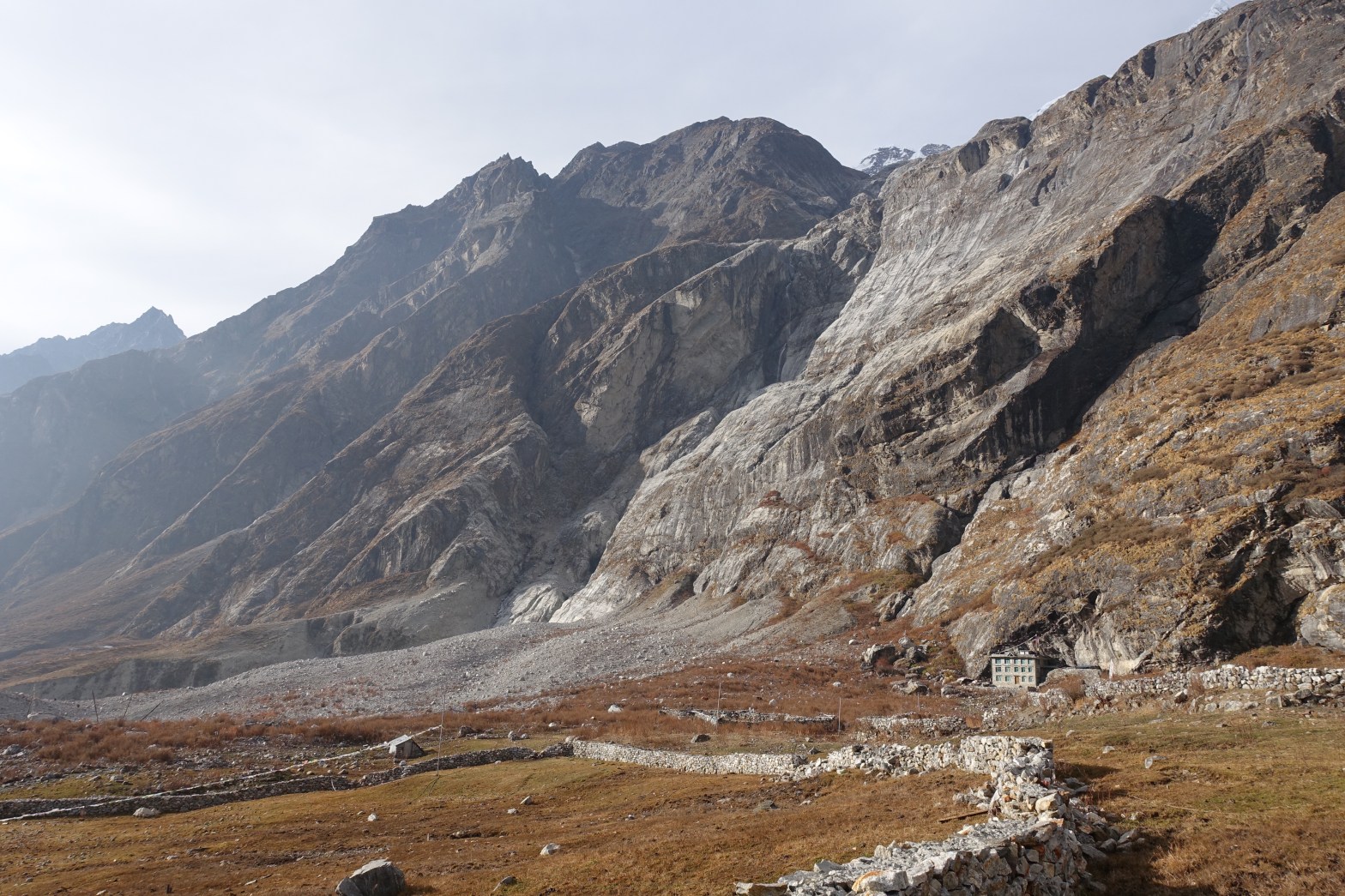
Earthquakes. Avalanches. Landslides. Snow Storms. Altitude Sickness. Heart Problems. These were the words circling my mind in the weeks and months building up to our trip to the Himalayas. I must admit, I was a little worried. But then I often worry. I love my imagination, but sometimes it takes me down a path that I’d rather not go. Whilst Jo was busy researching all the beautiful treks the Himalayas have to offer, I was researching survival tactics in the mountains. People do die in the mountains, and there have been a number of unexpected events in which many people have died; most notably the huge earthquake in 2015 and resultant avalanche/landslide that killed over 243 people in Langtang Valley alone (the destination of our chosen trek). Also, the freak snow storm in 2014 that killed over 43 people in the Annapurna Region, who were caught unprepared and unable to find shelter. It’s impossible to ignore these events, but it’s important not to let them consume you. Accidents can happen during trekking, but they are few and far between.
I like to be in control. A bit of a “control freak” you might say. When getting our travel vaccinations, Jo jokingly mentioned to the nurse that I could be a bit “controlling”. What she meant was ‘control freak’, but I chose not to correct her, for fear that would only confirm her original comment. I laughed instead. There is a lot that you can control and prepare for in a trip to the Himalayas, but there’s also a lot you can’t prepare for. I’ve read every article on surviving earthquakes, landslides, avalanches, snow storms, etc. I even attended a comprehensive consultation at the Altitude Centre in London to see how my body reacts at higher altitudes and spoke with my consultant at St Bart’s Hospital about my heart condition at altitude. As always, they advise against doing anything that’s remotely exciting. I bought a GPS tracking device, complete with ‘SOS’ function, an ABC watch (altitude, barometer, compass), a heart rate monitor, oximeter (to measure the oxygen % in my blood), a whistle, comprehensive travel insurance that covers helicopter rescue at high altitude (which is actually a requirement for Himalayan trekking). I almost got a membership with a company called ‘Global Rescue’, who come to your aid, A-team style, should you get into trouble. As it turns out, I was over-prepared. I would argue it’s better to be over-prepared than under-prepared, but I still think my worries got the better of me in the planning process.
In reality, once we met and secured our guide – Jay – and we started our journey through the valley, I’ve not been worried at all. Jay is extremely experienced in the mountains and even spent a few years working on Everest expeditions when he was younger. Earthquakes are a problem in Nepal, but history tells you that the significant ones tend to happen every 70 years or so. It’s been 4 years since the last big one, and the area we were trekking to would not likely be subject to another one any day soon. [Although I did get woken by a small earthquake during the night after writing this] Landslides and avalanches typically only happen during monsoon season (Jun-Aug), when the ground becomes saturated and unstable, or during earthquakes. There are also alternative routes that go above or around any risky parts of the trek. Snow storms – non existent on our trip – and our guide seems to be able to change the weather on command. I’ve been in shorts and t-shirt, sunglasses and using factor 50 every day and my bright orange salopettes (ski trousers) haven’t yet seen the light of day. It gets cold at night, but our thermals, sleeping bags and blankets keep us warm and cozy. You’re never more than 30 minutes from the nearest village or tea house and the Nepalese families welcome you into their homes with open arms and a beaming smile.
Our guide has taken full responsibility of our safety, ensuring we’ve taken on all the right amount of water, food, rest, acclimatise properly and ascend/descend at a suitable pace. When asking him about getting caught in a landslide, he smiled, subliminally told us there would be little hope, but mentioned the word ‘karma’ in his response. This is a major belief in Nepalese culture, and he was right. There are certain things you can’t control, in life and in the mountains. Do the mountains, or perhaps a higher power decide your fate? Who knows? But once you surrender yourself to the mountains, focus on putting one foot in front of the other and taking in all the breathtaking views, all your worries and stresses fade away into the distance. It really is heaven on Earth.
Next stop, India. Gulp!
-Peter
 Pete & Jo on the go
Loved reading your blog Pete! Keep blogging as it is good to hear about the amazing experience you are having on this journey and particularly your reflections on it. So pleased that you have that whistle! 😘
LikeLike
Thanks Diane. Glad you enjoyed it. Will do keep posting when we can. X
LikeLike