See picture gallery below.
A few days after arriving in Kathmandu, we left to go on a 12 day trek through the Langtang Valley. A moderately difficult trek from a small village low in the Himalayas, through the Langtang Valley towards Kyanjin Gompa – a small, picturesque village with a monastery at the foot of the mountain Kyanjin Ri (4770 m). Climbing this mountain requires a good level of fitness but no technical mountaineering skills. It brings you very close to the snowy peaks of the Langtang Lirung (7227 m), and rewards you with a beautiful view of the valley and surrounding peaks such as Gangchempo (6387 m). After climbing the peak, we walked back through the valley and proceeded towards the holy Gosaikunda lakes (4400 m) through the jungle and agricultural sites. We decided to travel with a guide and a porter. Something I was very firmly against when we started planning for the trip, but ended up being very grateful for. The guide became a friend and the porter was very skilled and appreciative of the job. It made our experience a more enjoyable and educational one.
The trek contains gradual climbs and descends, with some parts steeper than others. The sights are unbelievable, and you cross interesting people and different village cultures. We hiked in a national park, in the Tamang region. This is home of one of the 126 different ethnic groups Nepal has to offer. On many occasions you have to cross landslides, which can be a bit frightening as we figured one shifting rock can release many others. Our guide ensured us this is mainly a risk during the monsoon season (June/July/August). During the day we were often very warm, walking in the blazing sun, but the evenings, nights and mornings were often freezing cold. During the trek, we slept in small teahouses. With very basic facilities and no heating, but offering an adventurous and charming experience. Waking up in the very early morning in a new, cold room, whilst being cozy in our down sleeping bags while already wearing our hiking clothes. Being greeted by the Tamang families and their adorable children who run the guesthouses, having porridge with apple for breakfast with a black (‘malang’) coffee, climbing or descending for 6/7 hours, being astonished by the views of the beautiful mountains (‘sundar himal’) and river (‘sundar khola’), and having unlimited portions of dal-baht and garlic soup. Because we hiked 6, 7 hours a day we were allowed a guilt free unlimited amount of chocolate. Not bad at all. Evenings are for playing cards around the fire. We learned to play a Nepali card game called ‘Dumbal’ (it’s a great game, ask us how it works) which we played every night, followed by a game of hearts. Over tea and during the trek we had a lot of opportunity to ask our guide (and now friend) Jwala about all sorts of topics, like Hinduism, Buddhism, Nepal, Tamang (his family tree), language, food, traditions, etc. Our porter Bohj (I call him Boats, Pete calls him Boots) is a very shy man from a nearby mountain village who loosened up a bit more over our daily card games. We challenged him to speak English and he challenged us to speak the Tamang language. Every night we went to bed early (8-ish). We were being very good…
Things that have struck me most
The unimaginable scale of the surrounding mountains, along with the comforting thought that no matter what happens, these mountains will forever be there. The rivers and waterfalls that are so old and powerful they lanced through the thickest rocks splitting them in two. Being part of this mountainous land made me feel more grounded and part of something big. I was also blown away by the astonishing views of Langtang Village and the Langtang Lirung and its glaciers. It’s very confrontational to see the devastation left by the the landslides triggered by the 2015 earthquakes. I do admire the positive mentality of the people involved and the way their houses have been rebuilt from scratch, by the community, travellers, NGO’s and the UN (little help from the government, some say). I admire the working mentality of the mountain people. It takes days to reach the remote villages and everything that’s exported/ imported is carried by foot, or with the help of a mule or horse. We saw young and old people carrying loads up to 90kg on their heads. I was also struck by the spirit of the Nepalese, especially the young children – they aren’t shy! I also enjoyed sitting in silence at gompas (monasteries) and stupas (temples), around prayer flags that whisper the mantra ‘om mani padme hum’ with the wind. The prayer flags salute the elements: clouds, fire, forest, sky and earth, showing the respect the buddhists living in these villages have for the earth. These are just a few things – I loved it all thoroughly and recommend this trek to everyone (no matter your age or fitness).
Animals we greeted along the way
Dogs. Cats who looked cute but were evil, cows, yaks, naks (crossing between cows and yaks, ‘not yaks’), buffalos, white-faced monkeys, musk deer (who get hunted because of the smell of their navel goes well in musk perfume), all kinds of birds (Himalayan monals, pheasants, woodpeckers, etc.), tame goats, mountain goats, bees, butterflies, mules, horses, lizards, chickens/hens, grasshoppers, crickets, other humans.
Animals we’ve eaten
None. Full veggie on this trip.
Next stop
We decided to postpone our trip to India as there is just too much to do, see and learn here. We have been given a walnut (which means we are invited) to be guests to a Tamang wedding ceremony we are now getting ready for. We will undoubtedly write about that later.
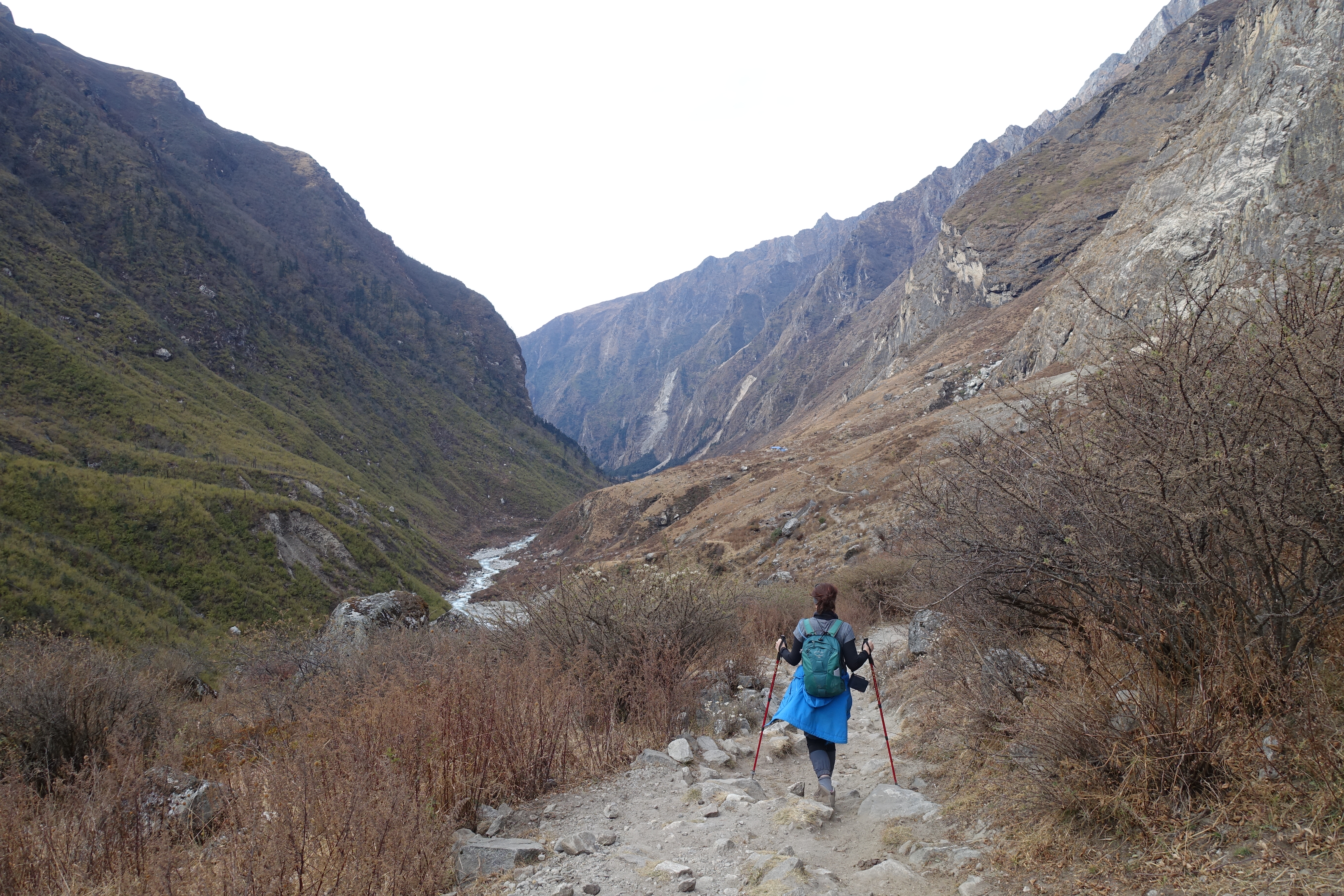
The Langtang Valley trek goes through the same area twice, but the view during the trek changes a lot. 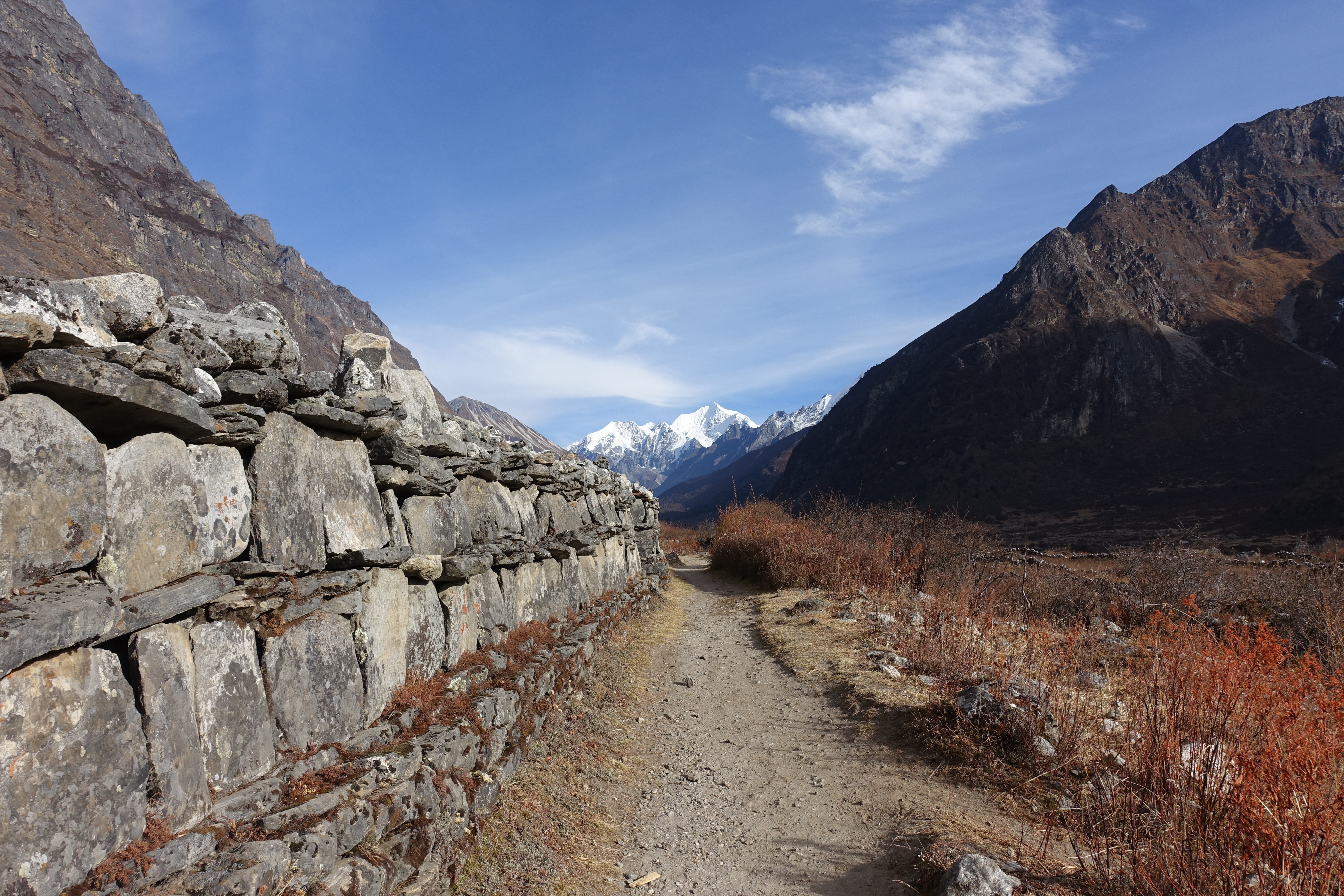
You find many prayer walls en route. You always need to pass these walls from the left side (clockwise). 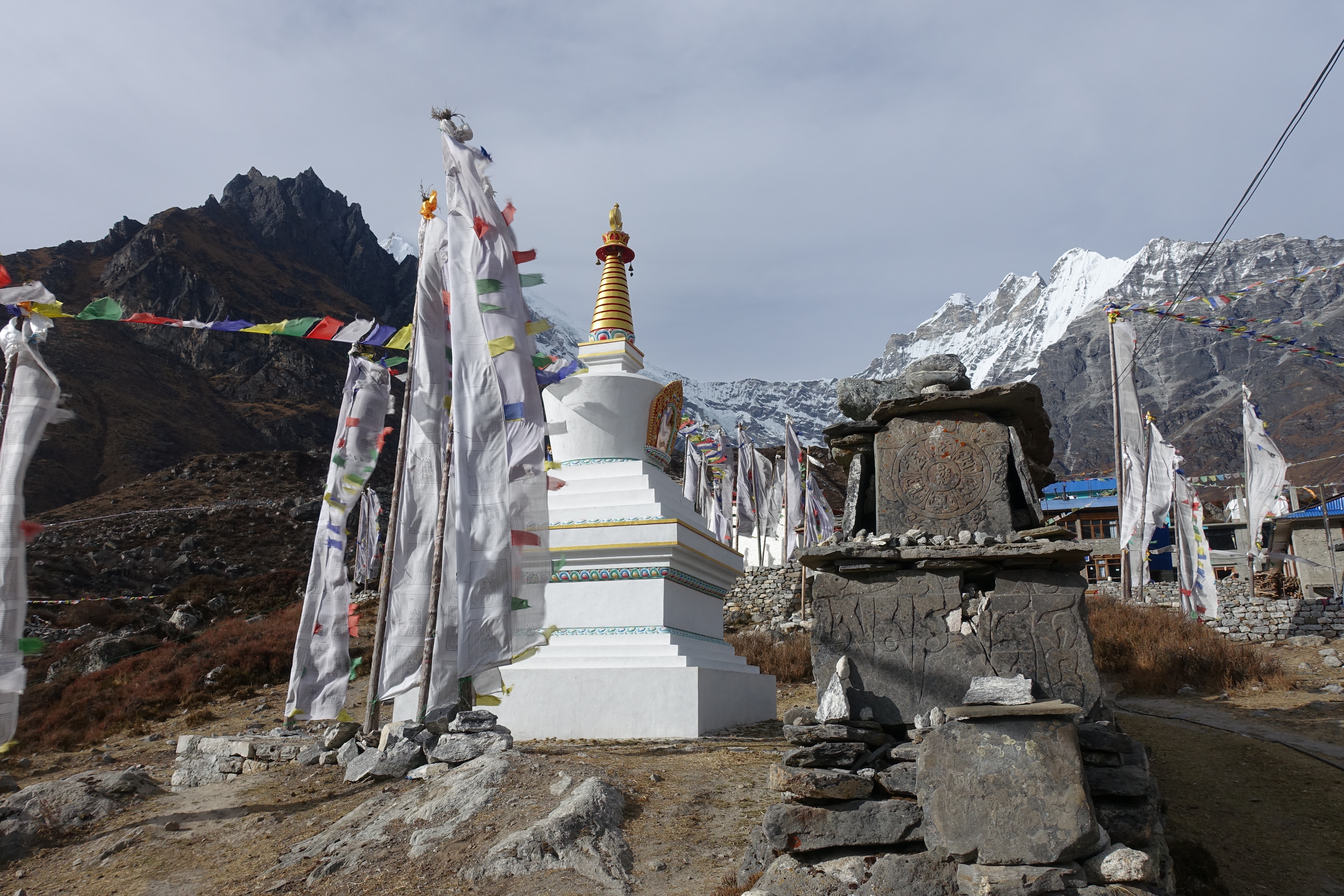
A stupa, prayer flags and a prayer wall. 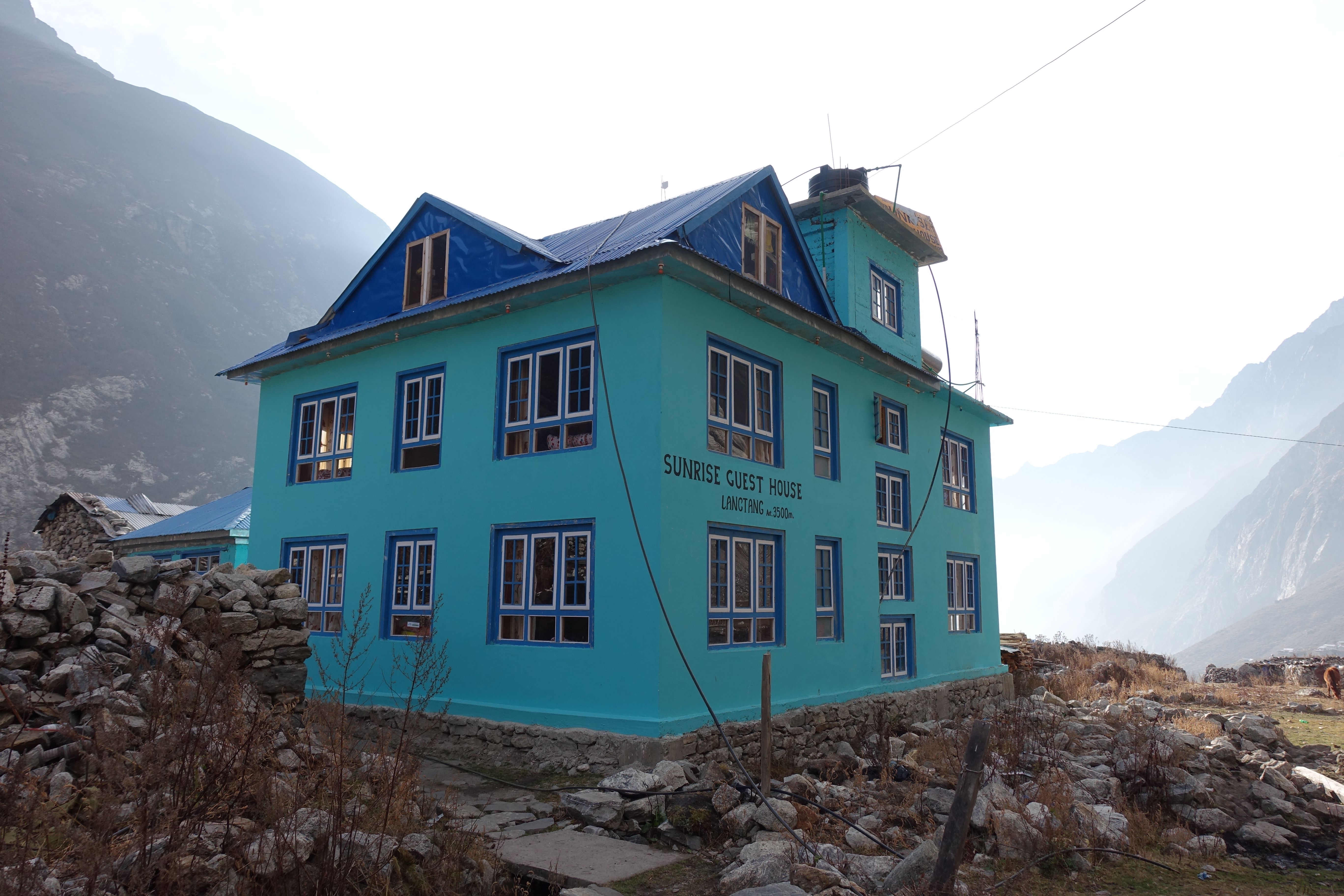
At night, you stay in teahouses. This is one of the bigger and newer one in Langtang. 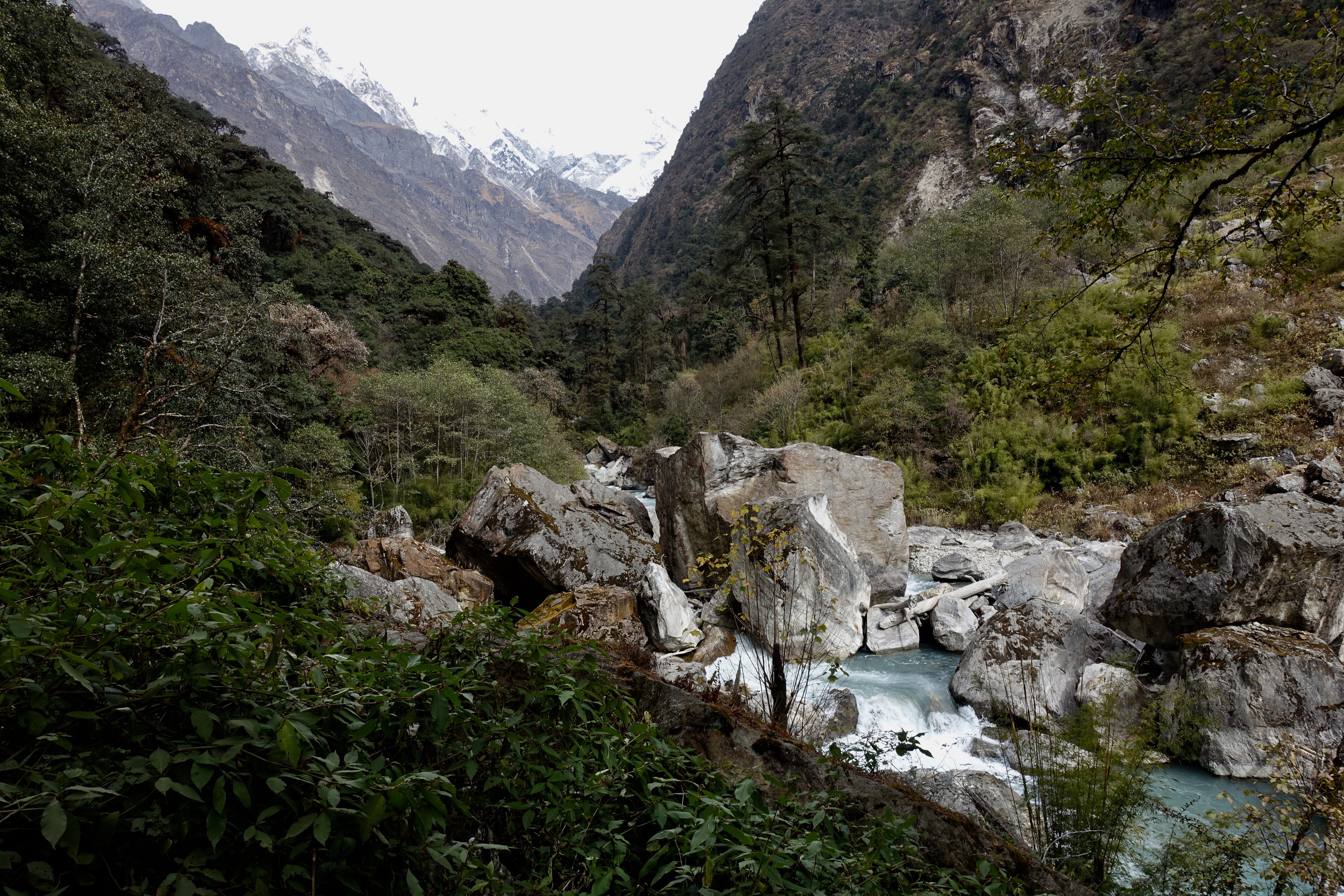
The trekking route runs parallel to a very old river, leading towards Tibet. The water is close to freezing temperature and full of minerals. We didn’t attempt to drink it, though. 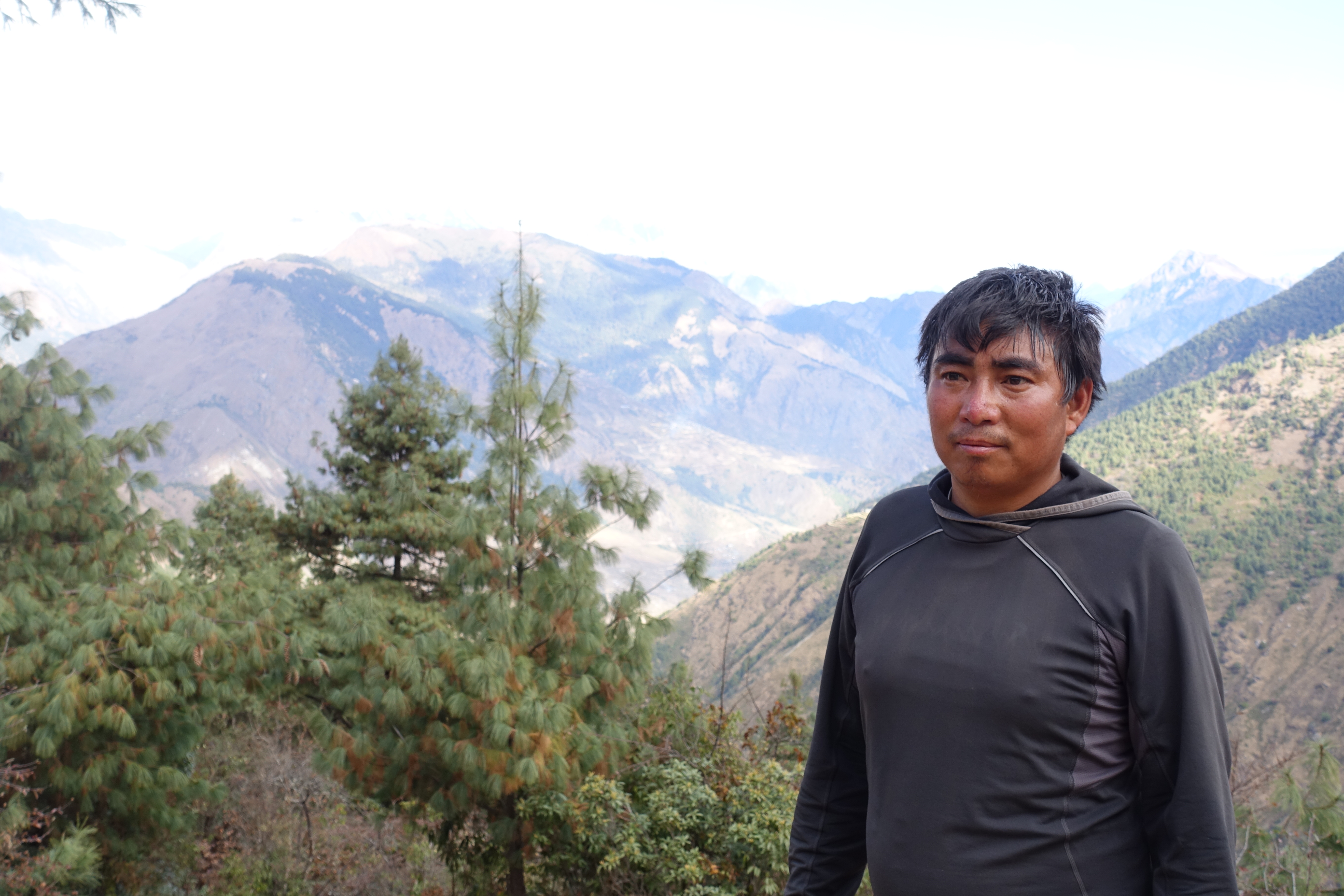
This is our friend and porter, Bodj. 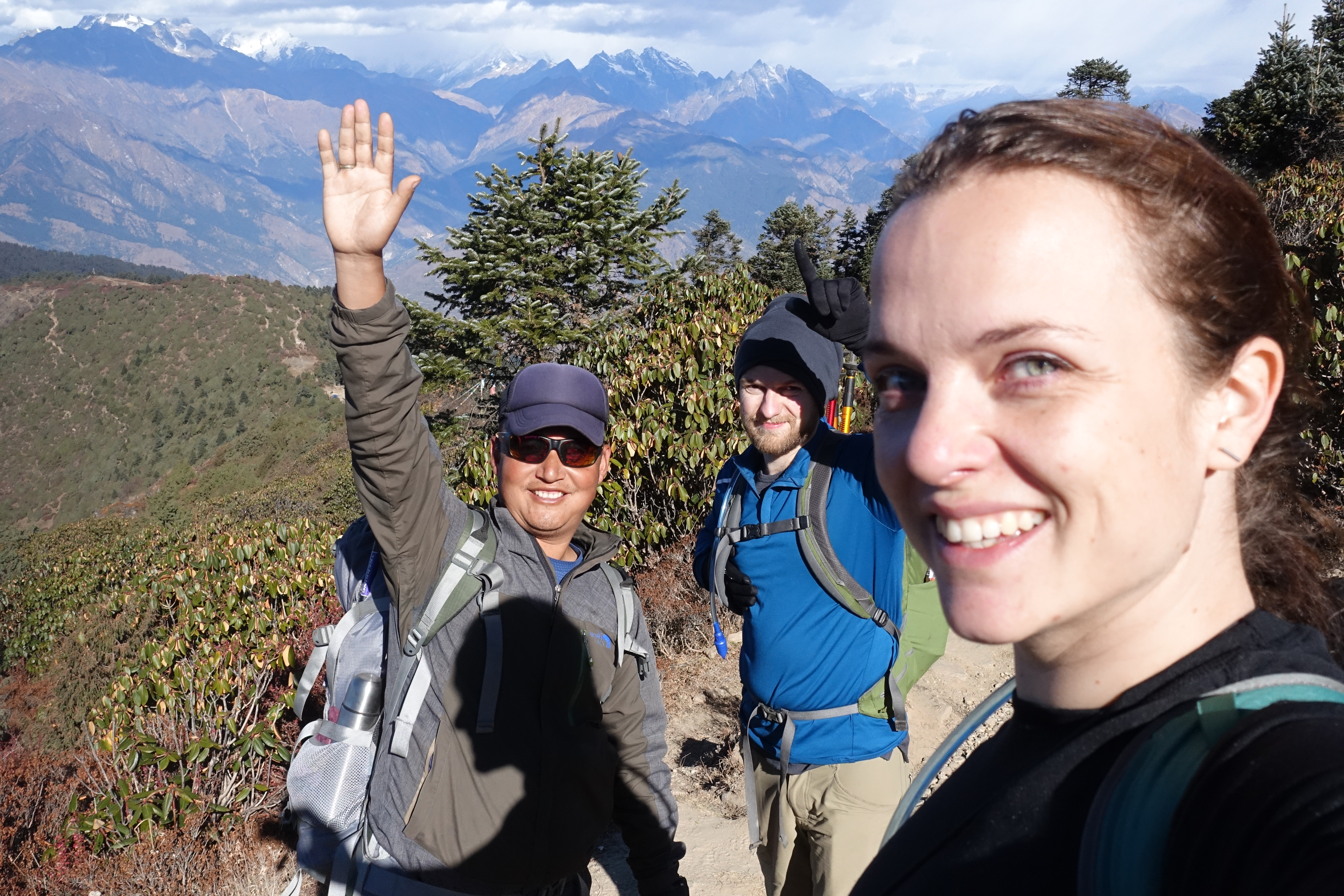
Us and our wonderful friend and guide, Jwala. 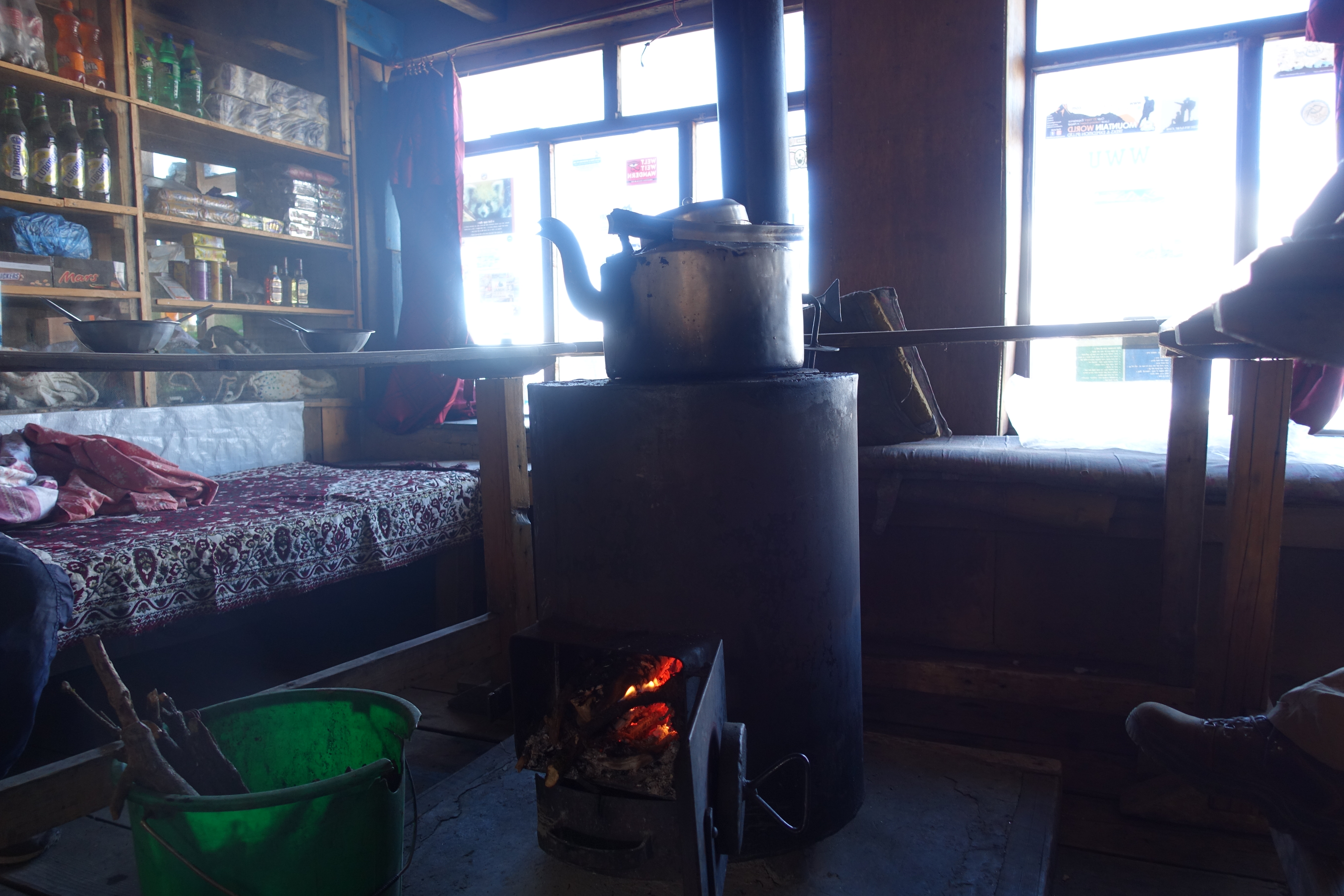
There is no heating in the teahouses, so at night everyone gathers around the stove. 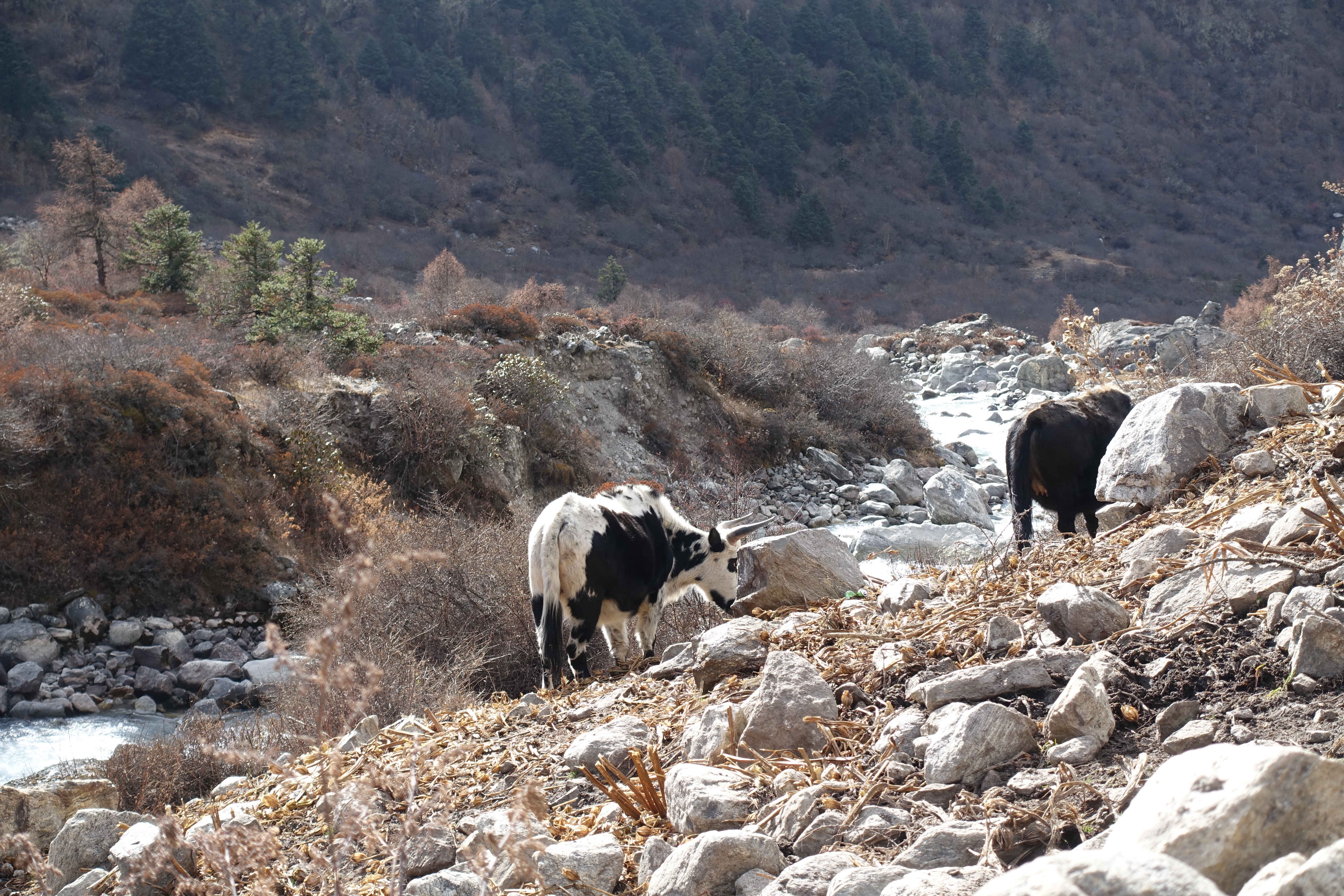
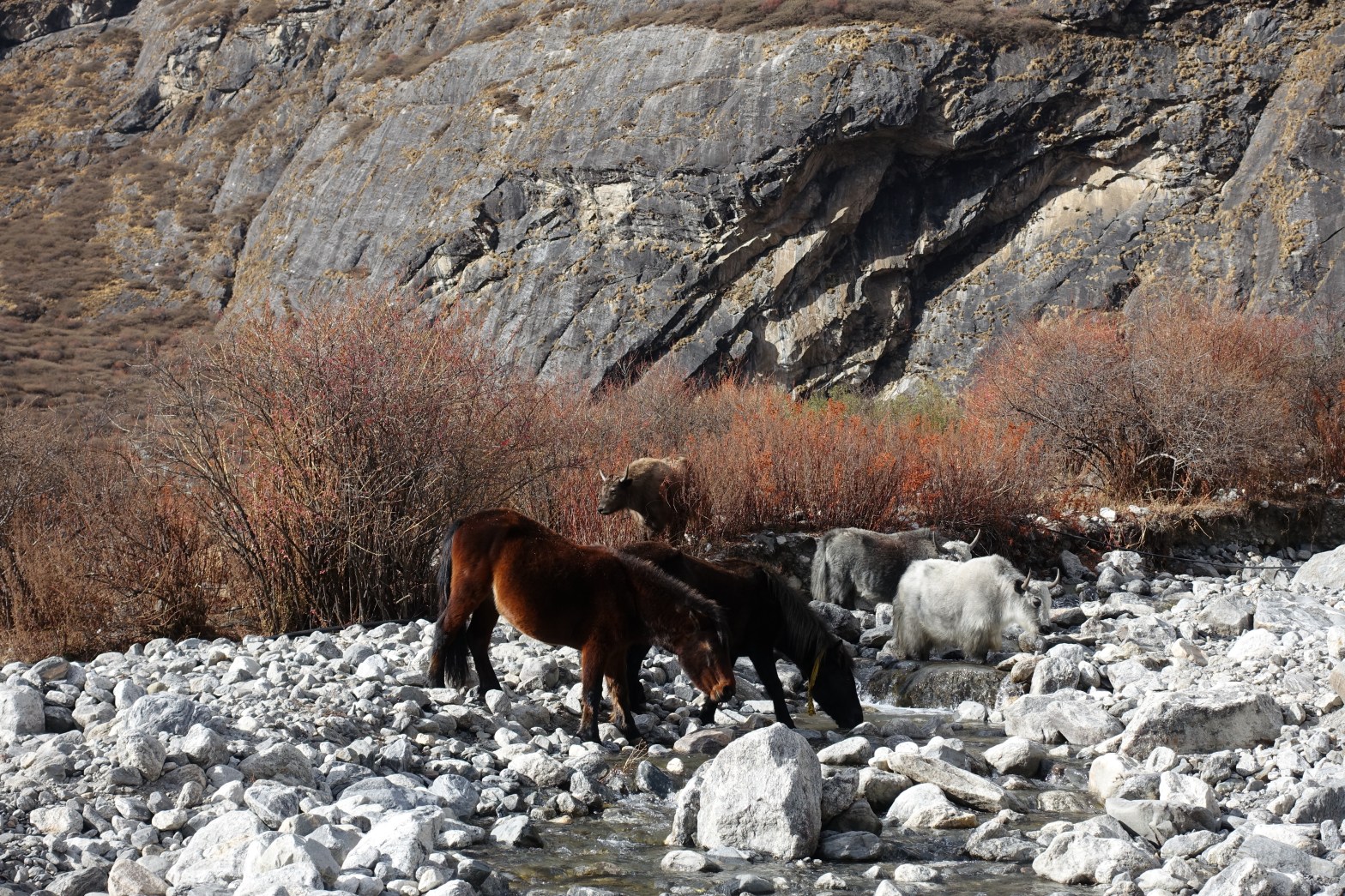
The many yaks, naks, cows and donkeys you find during the trek make it even more enchanting. 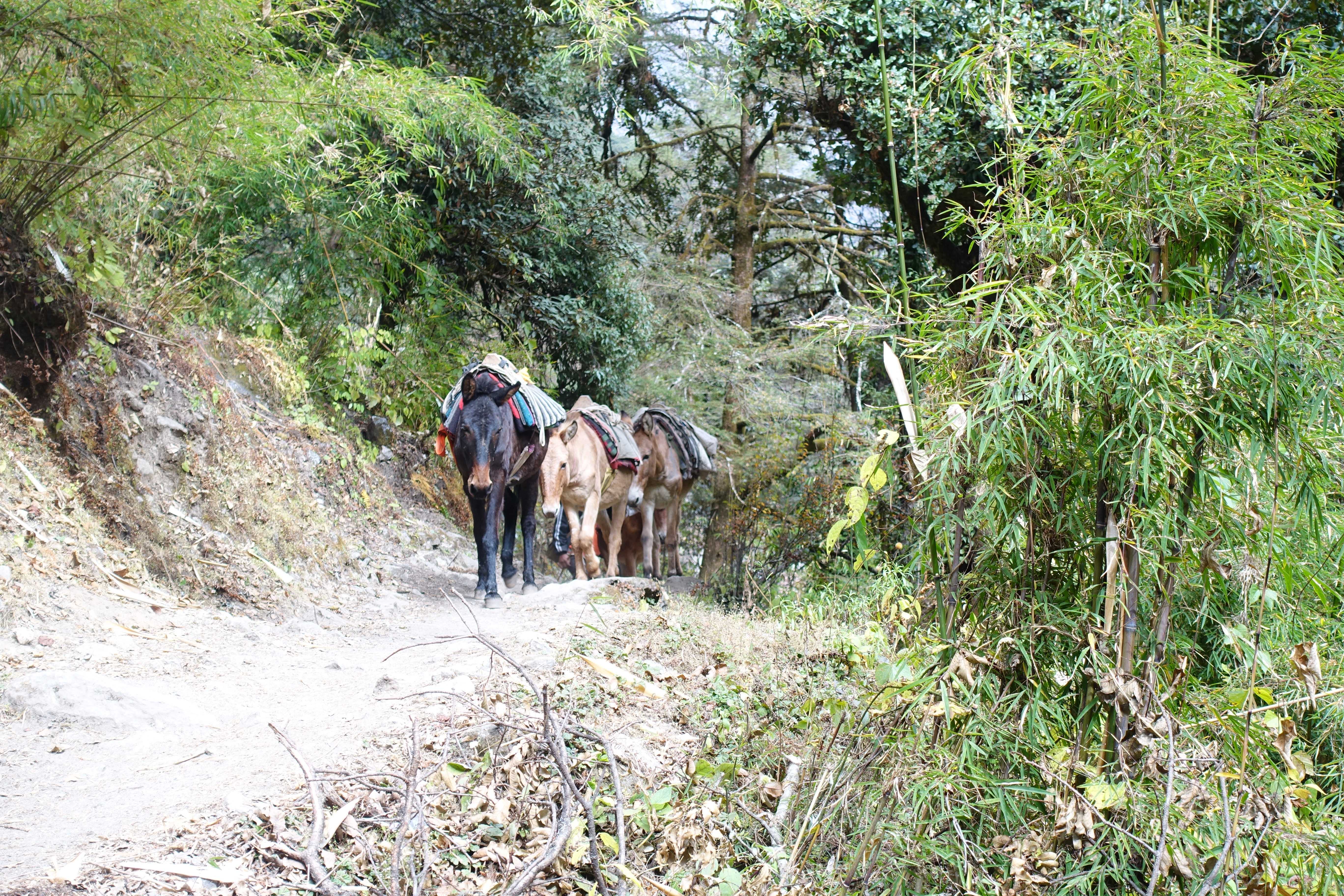
The trekking route is also a “highway” for workers and donkeys carrying items from one village to another (cement, rice, gas, wood, etc.) 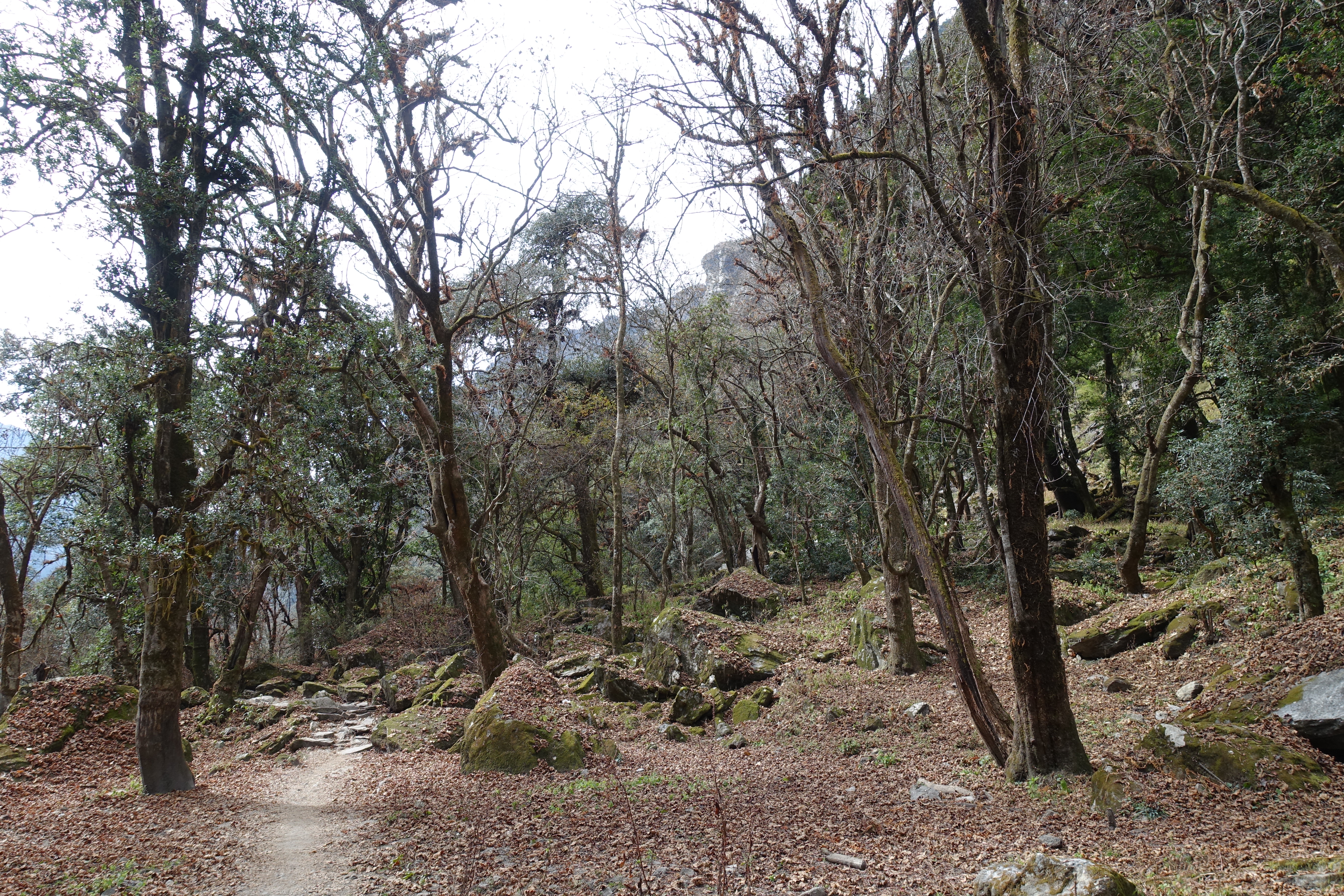
Part of the route goes through forest. It is overwhelmingly beautiful with many old trees and much wildlife (birds, monkeys, deer, etc.). 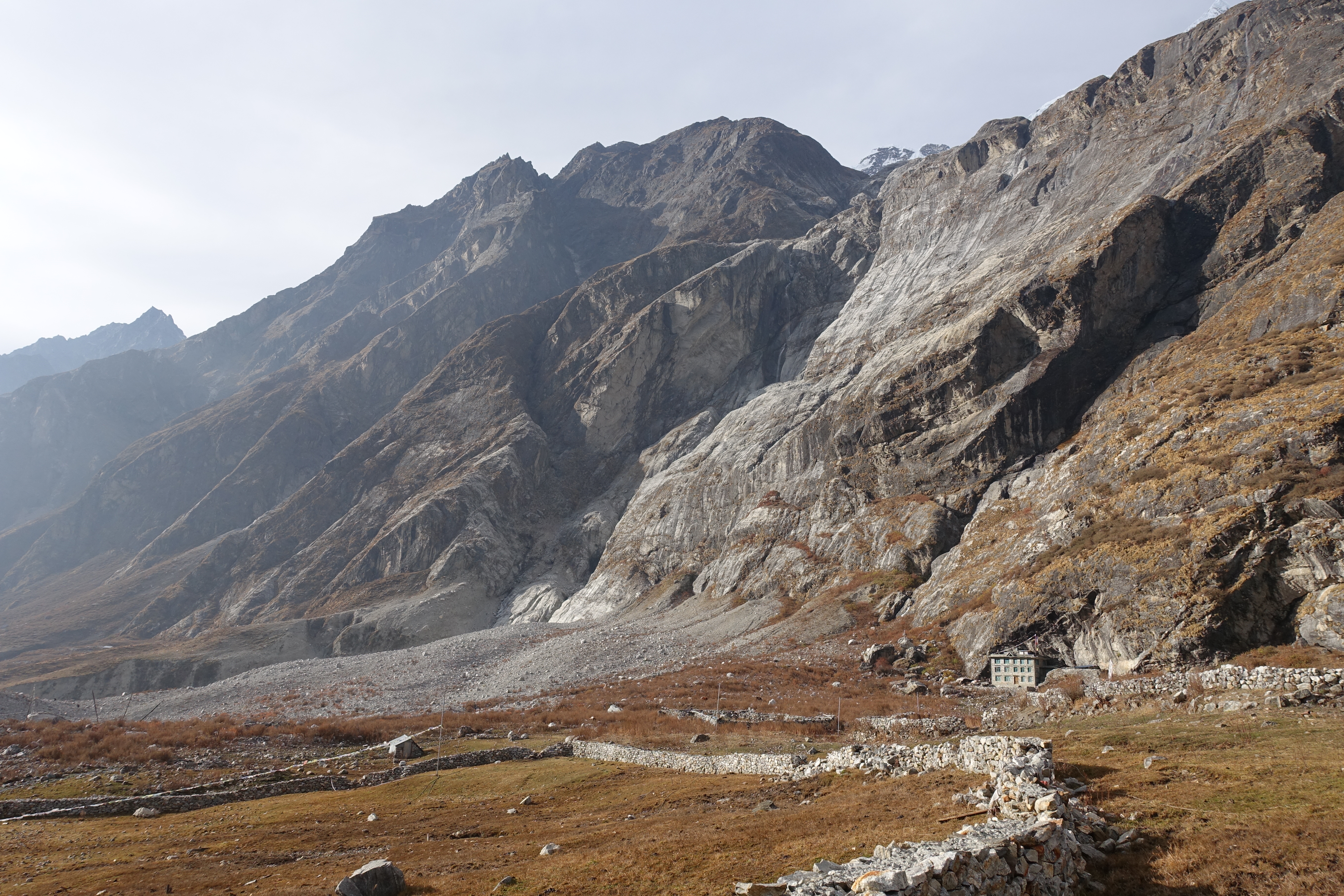
One of our favourite, but most tragic places: the area where Langtang village was before a glacier after the 2015 earthquake destroyed it. The only house still standing is the one thats shielded by rocks, in the right of the picture. 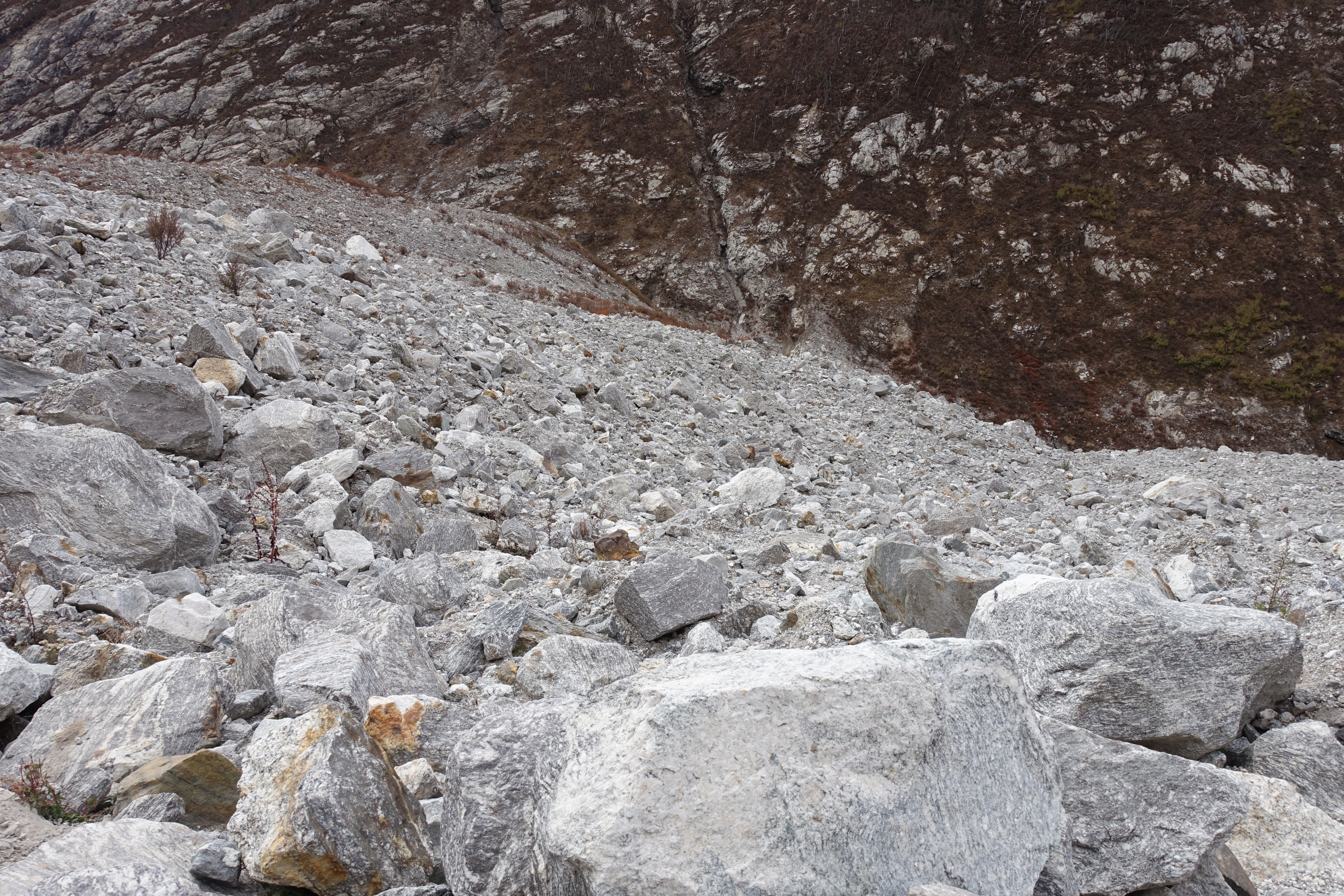
There are many parts where you have to walk over landslides. Don’t attempt this during monsoon season 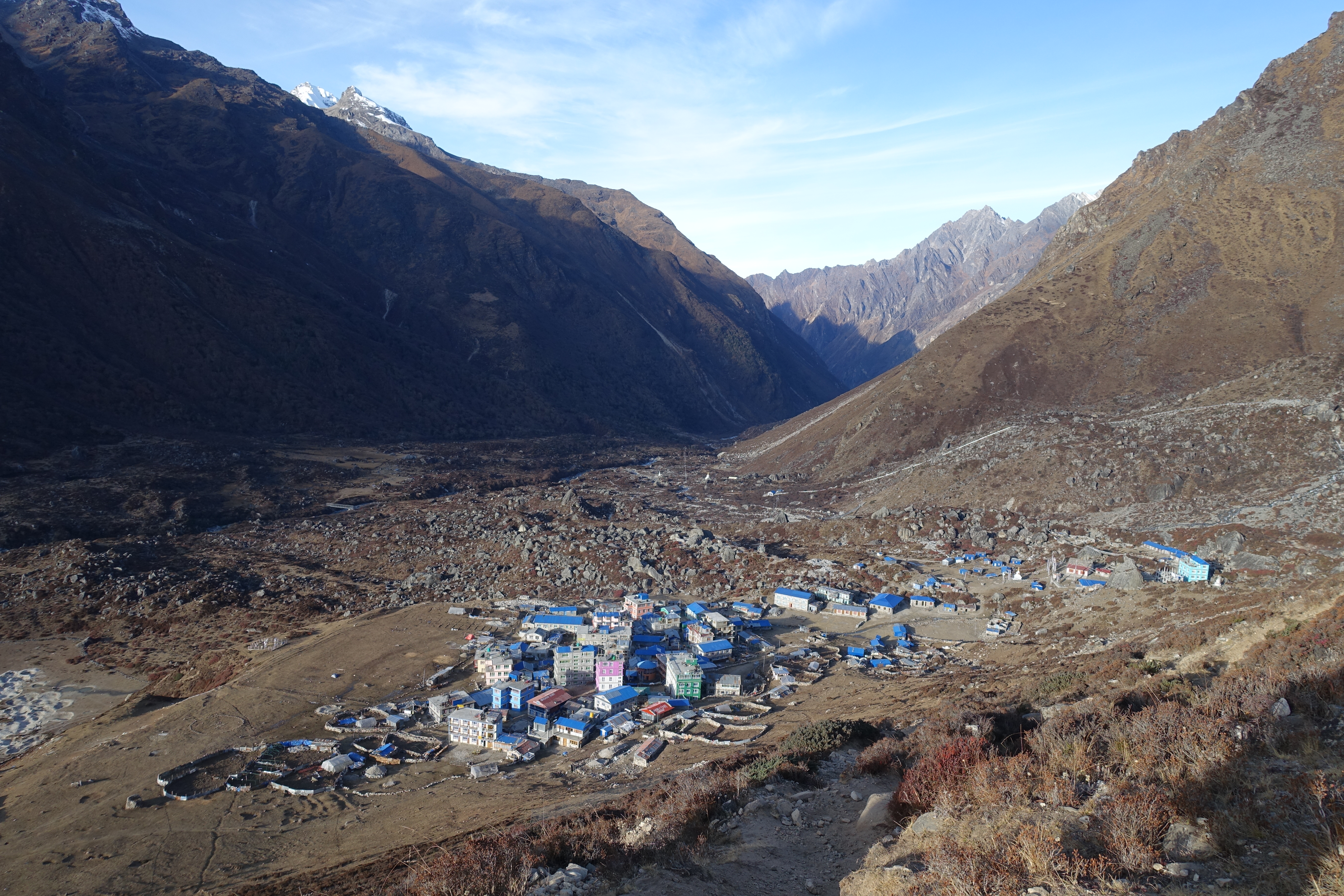
Kyanjin Gompa. The village at the end of the Langtang trail, located at the foot of Kyanjin Ri mountain (4770m). 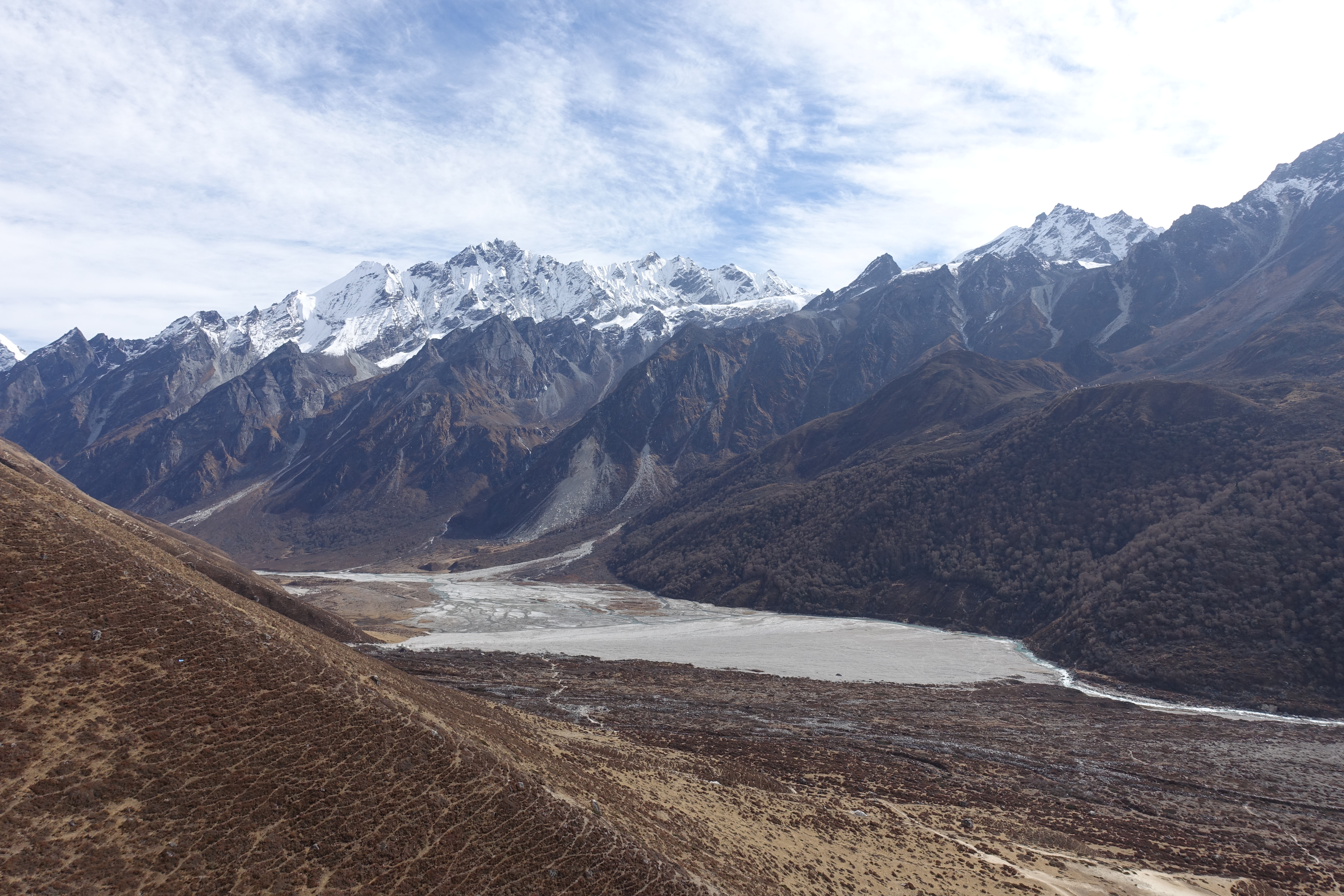
The view halfway up to Kyanjin Ri. 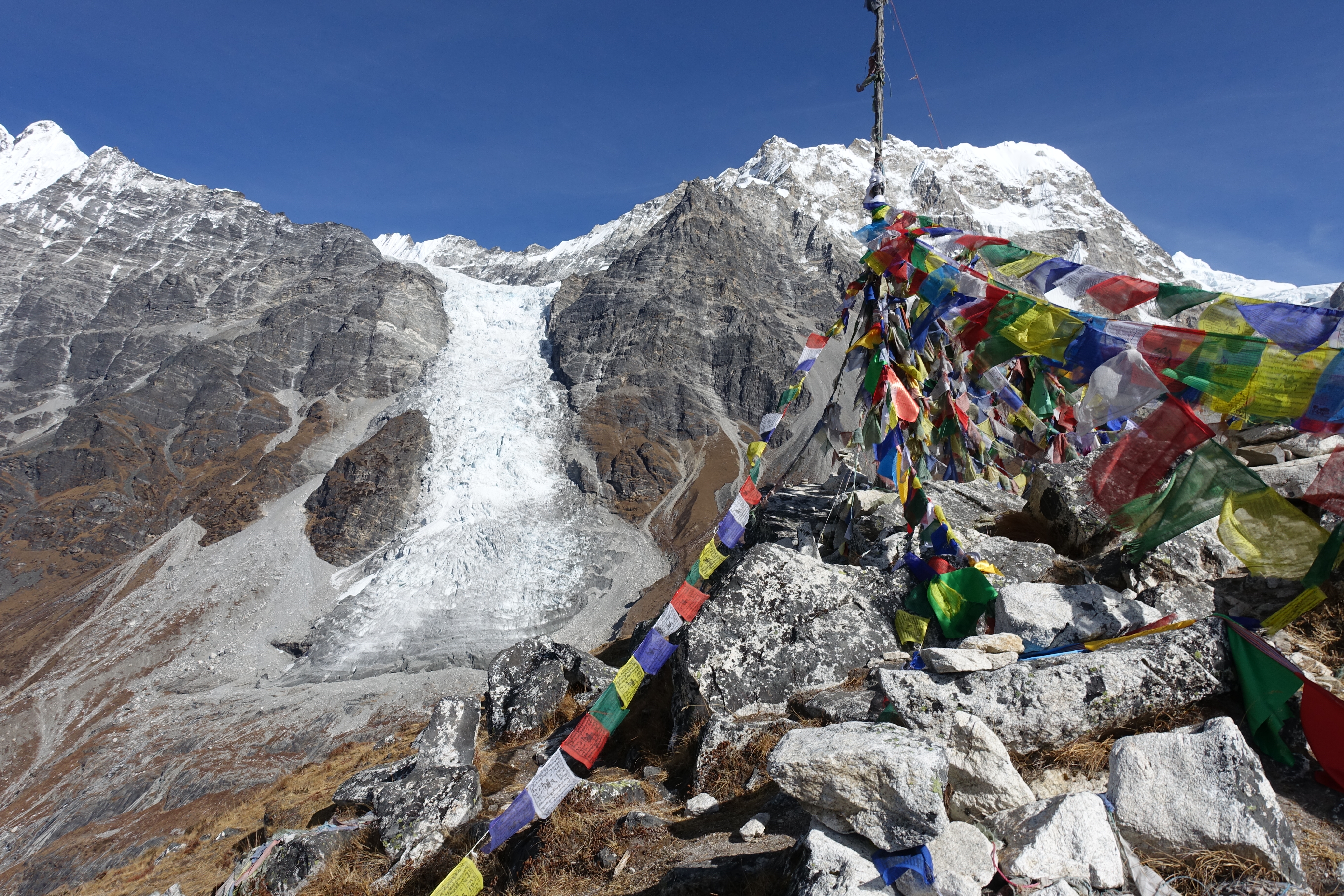
A glacier seen from the top of Kyanjin Ri. 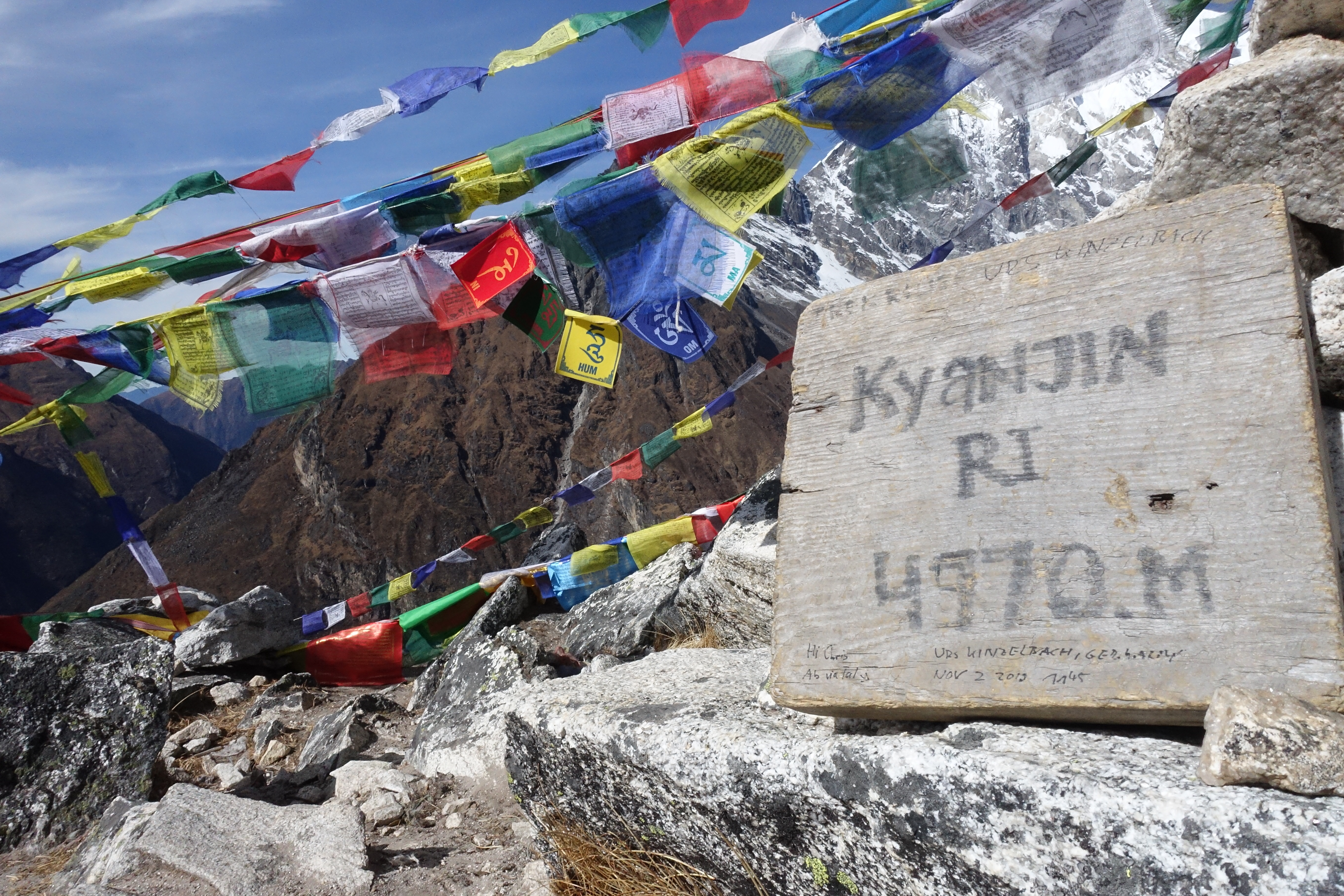
Top of Kyanjin Ri. 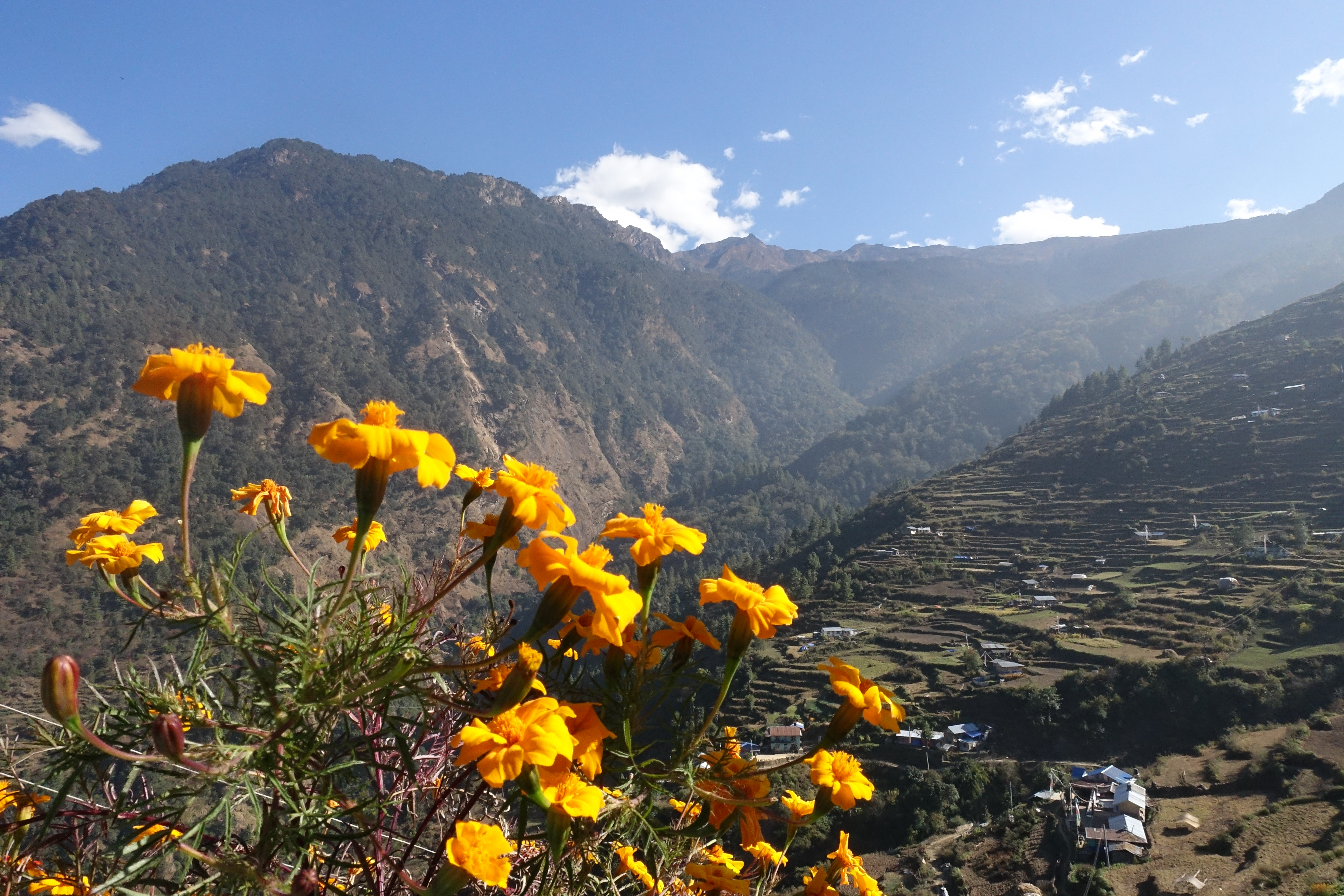
After hiking back for a few days, we ascended again up to Thulo Syabru. A beautiful mountain village with a lot of agriculture. 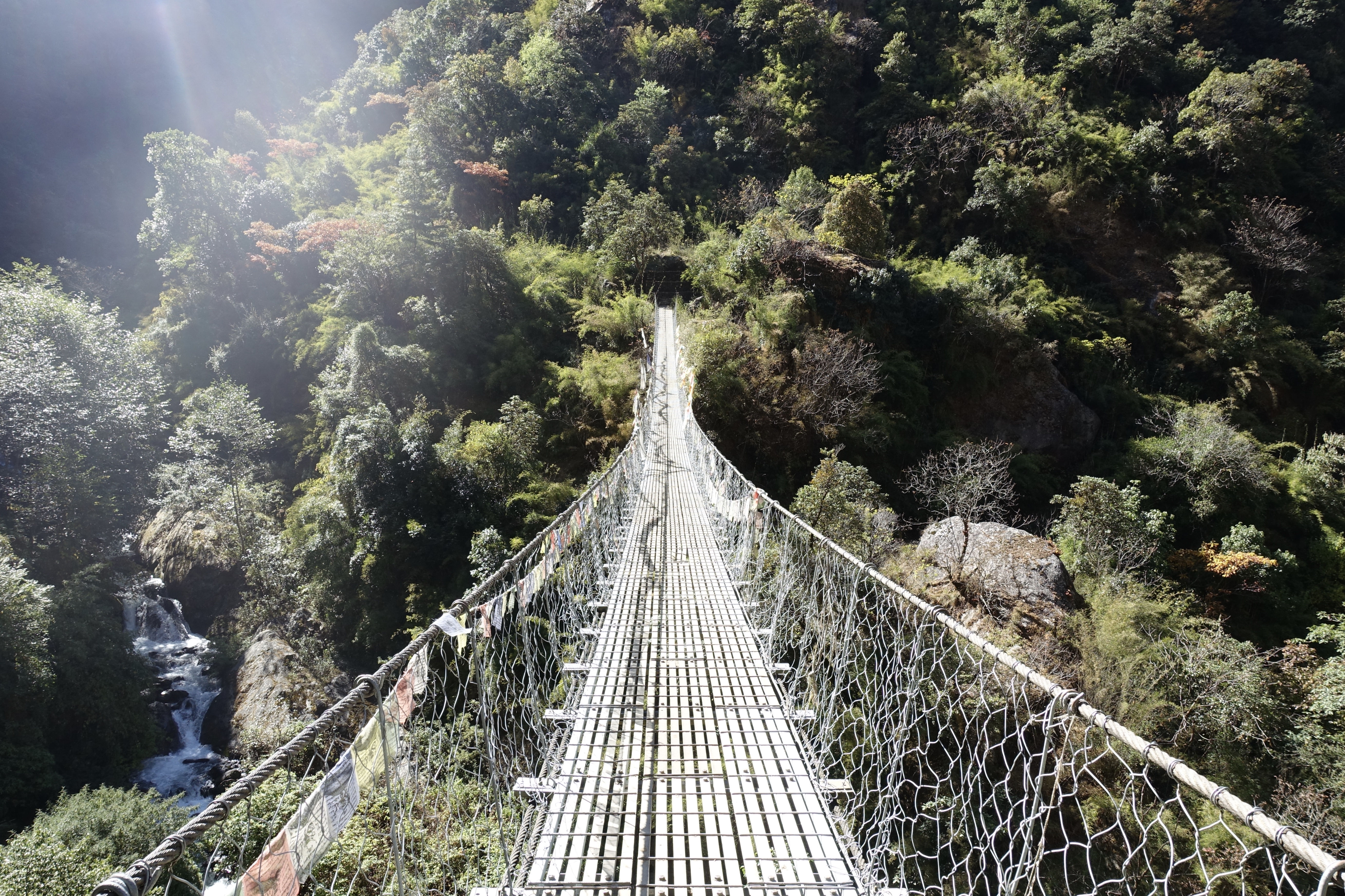
We crossed many of these beautiful bridges on the way 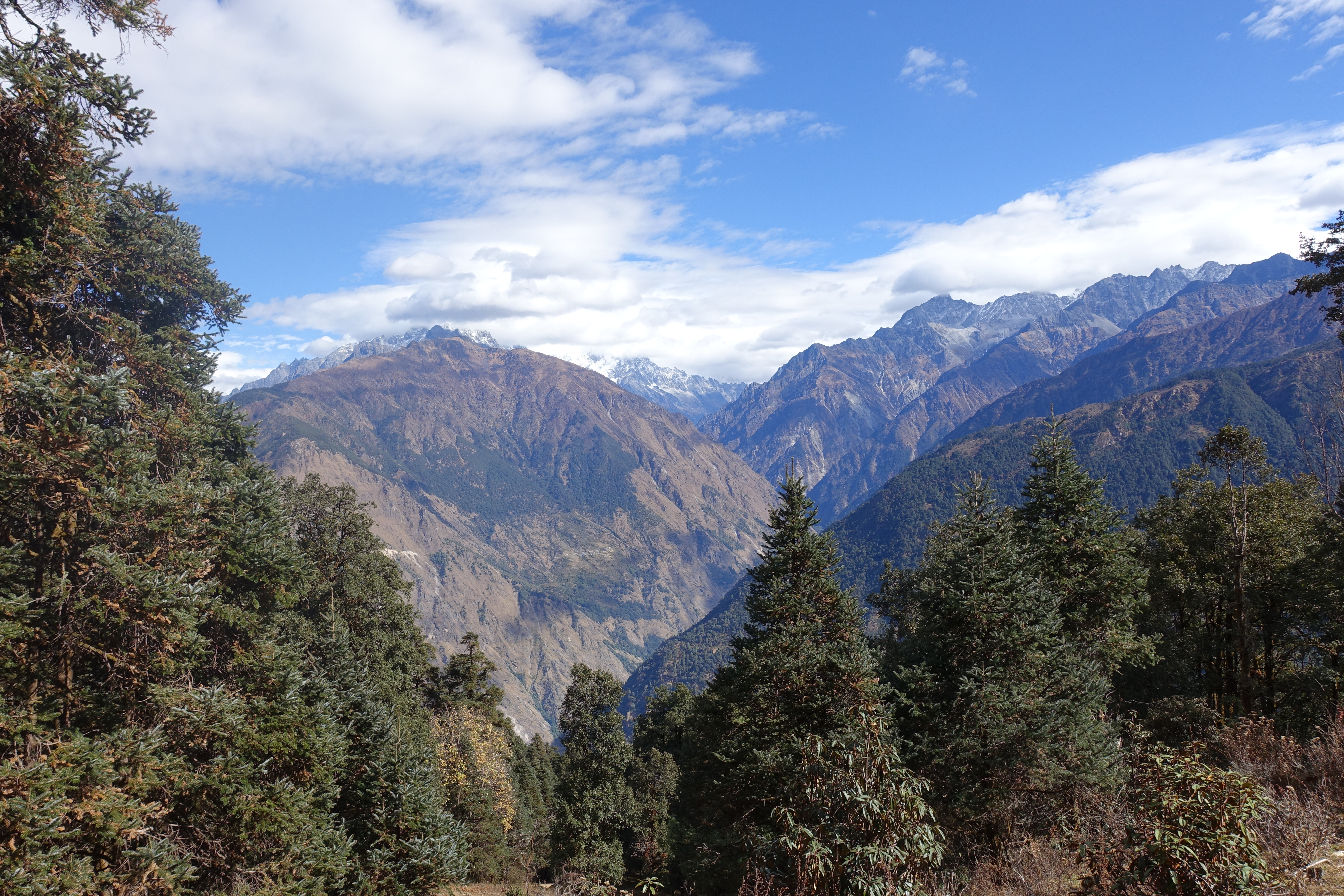
The view from Thulo Syabru towards Sin Gompa. 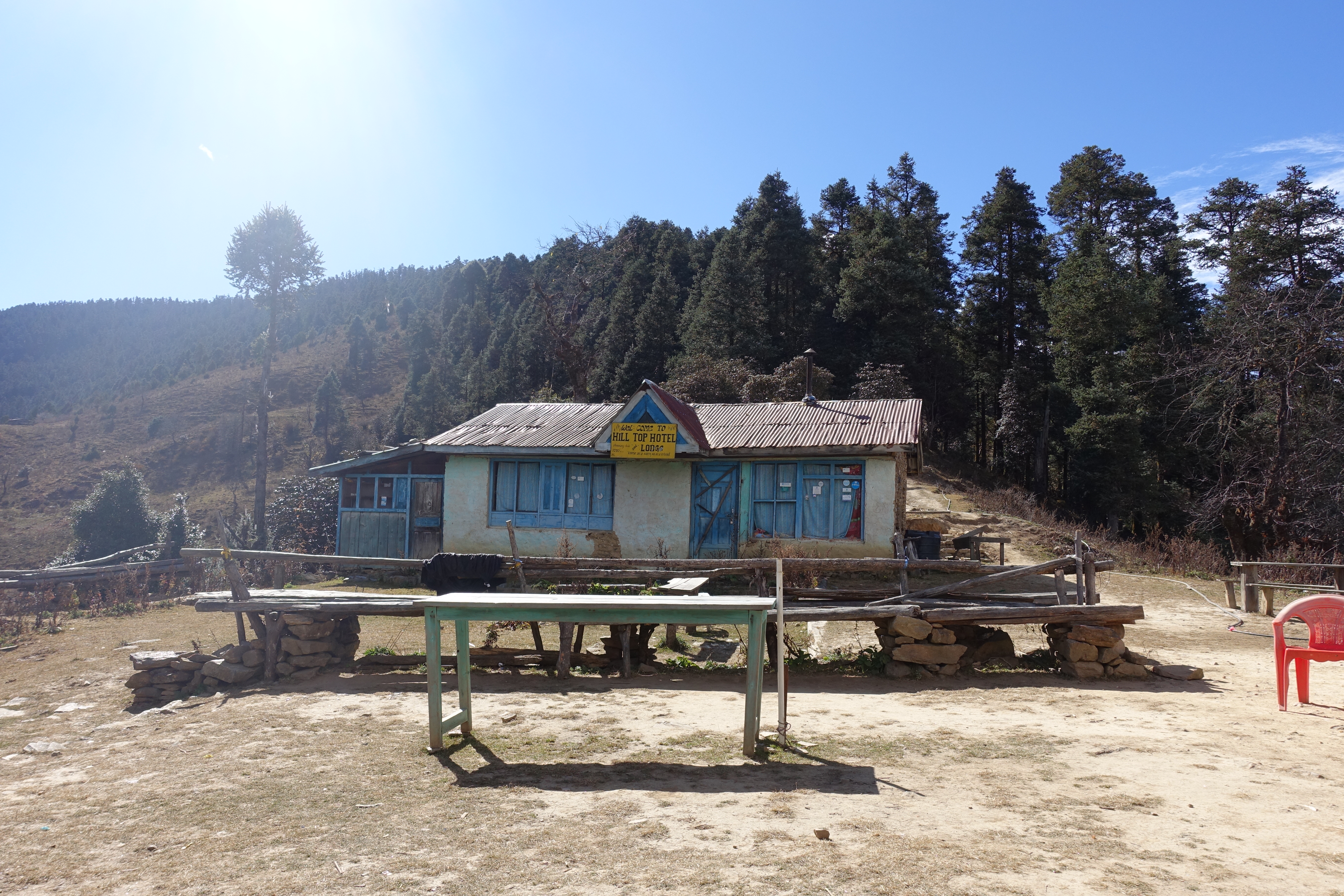
After Thulo Syabru we headed for the holy Gosaikund lake, via Sin Gompa. We came across this restaurant after a firm climb that took us hours. 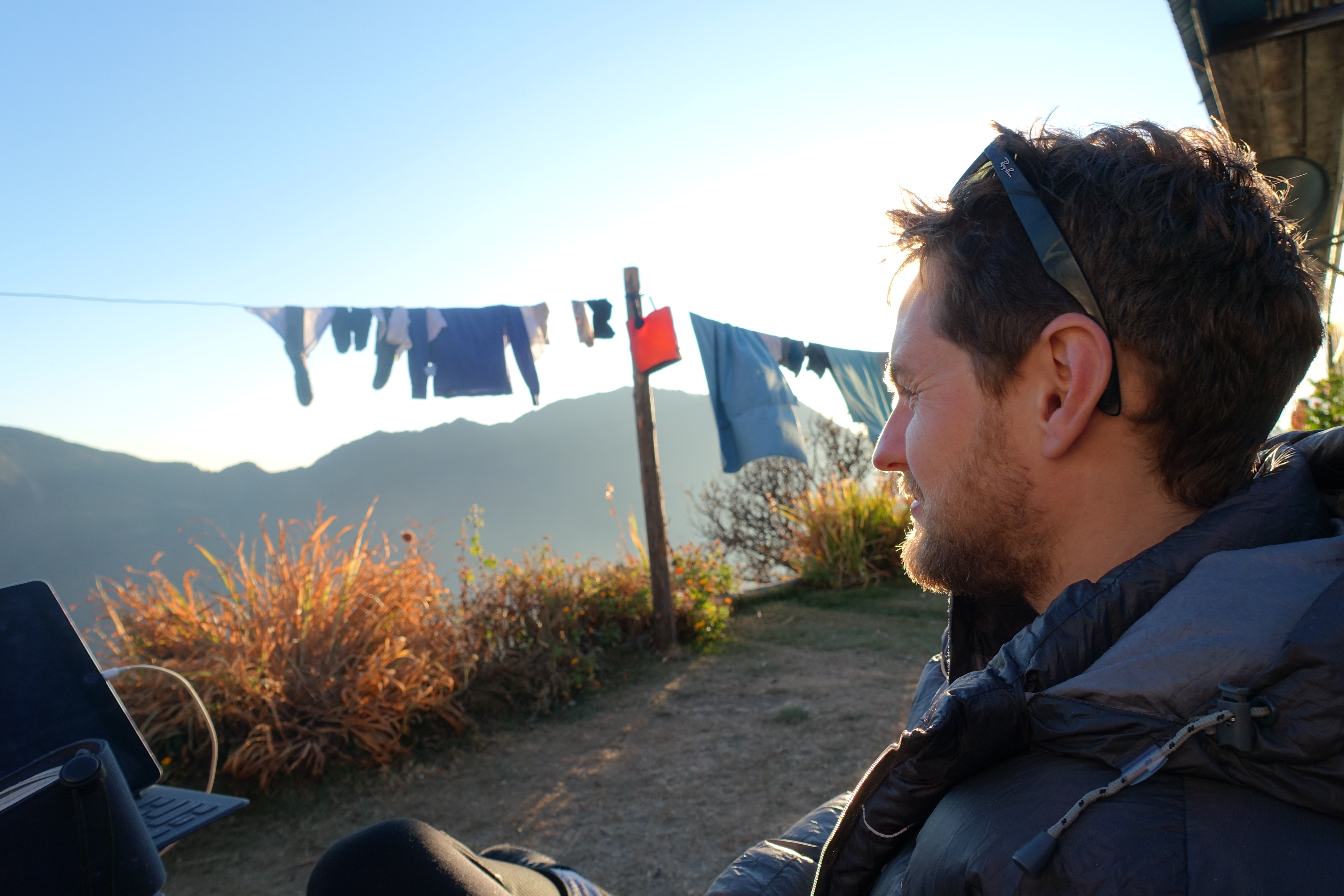
Hanging out our hand washed laundry in Sin Gompa, enjoying a beautiful view 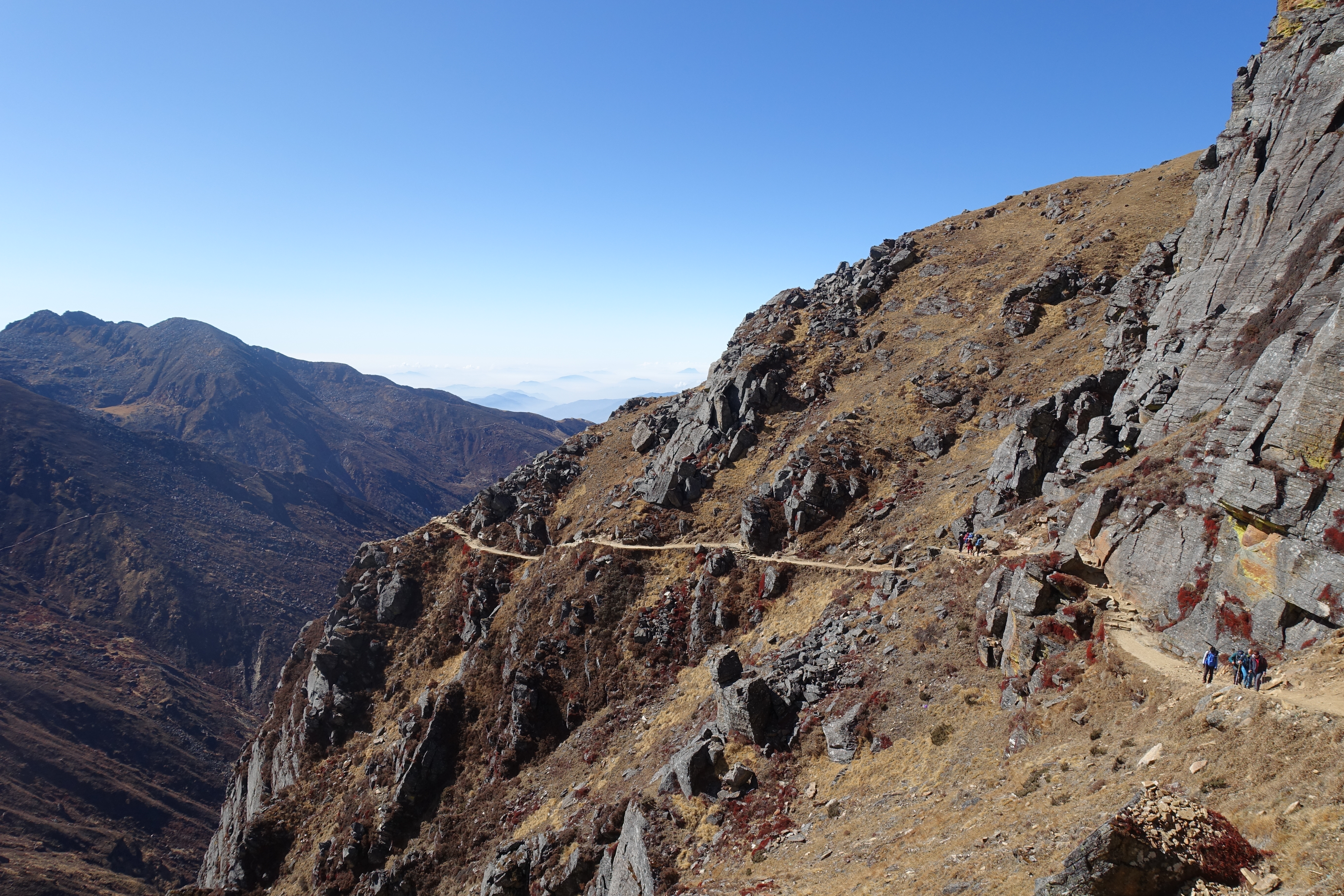
The route towards the lake was exhilarating. 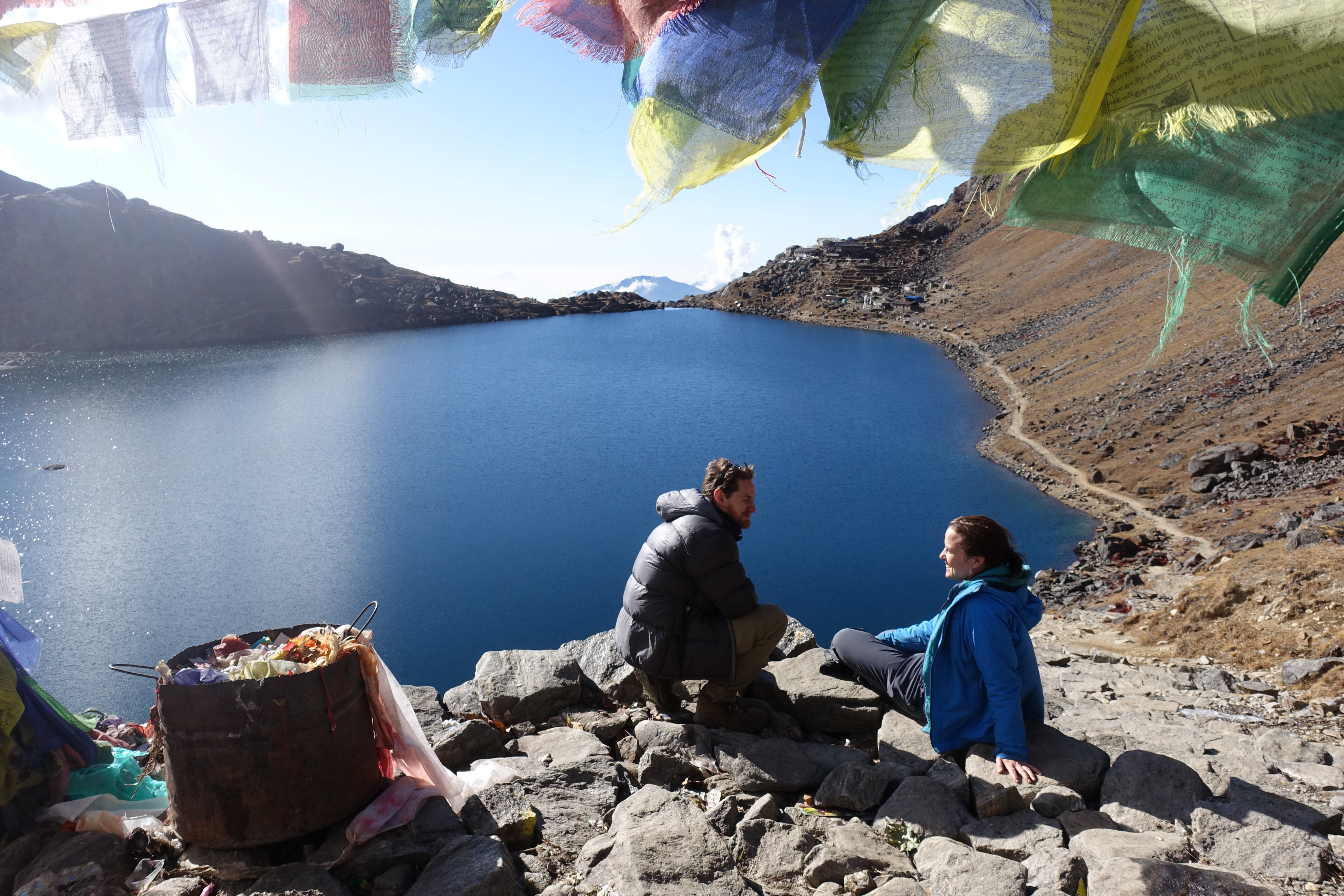
Resting at the Gosaikund lake (4400m) where we also spent the night. 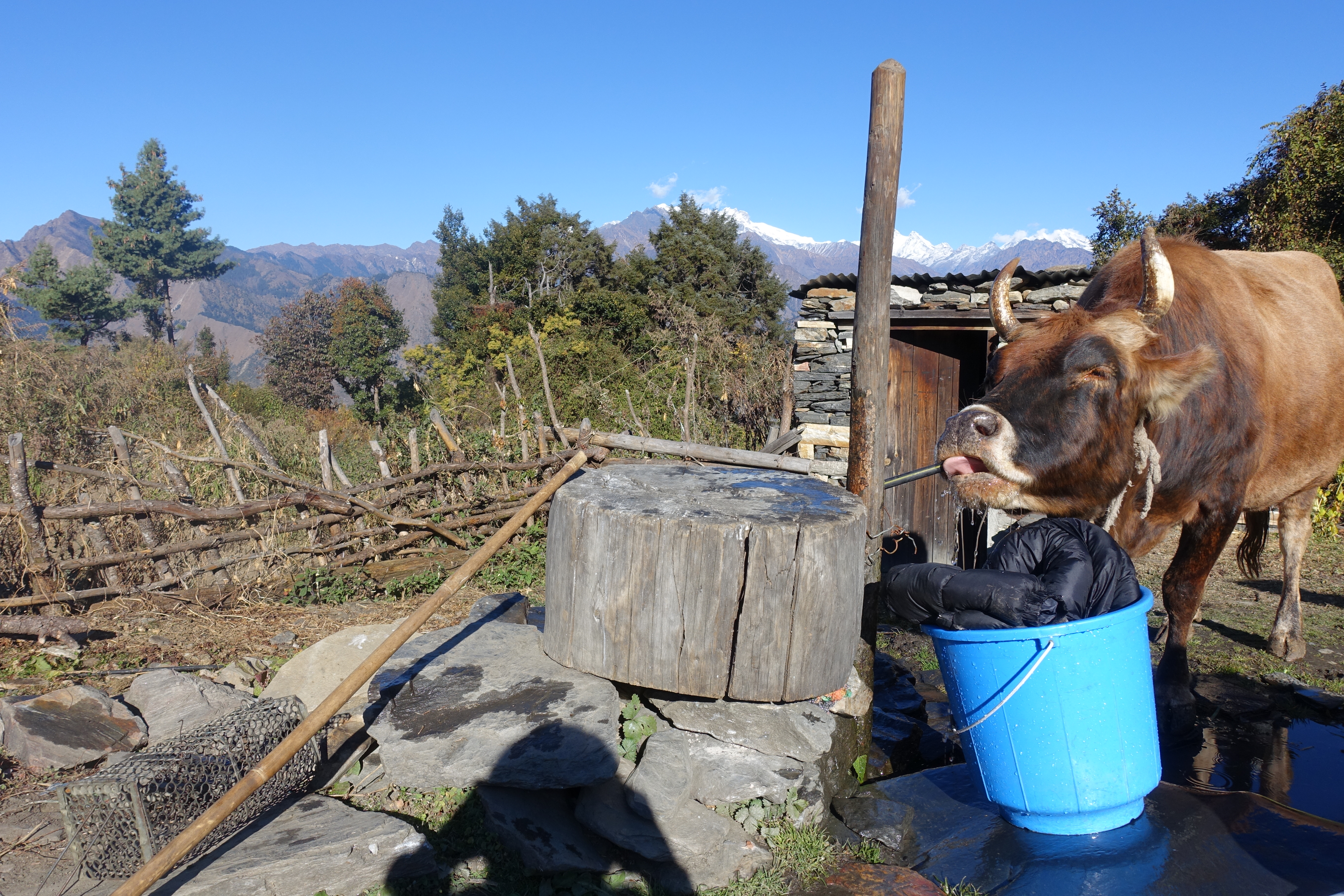
Never a dull moment in the mountains.
 Pete & Jo on the go